





The space between your last productive activity of the day and the moment you fall asleep is the most neglected part of most routines. Most of us go directly from screens, conversations, tasks, and mental stimulation to lying in a dark room expecting our nervous systems to immediately switch off. When it doesn't work, we blame our inability to sleep rather than questioning the abrupt transition we're asking our bodies to make.
She-Approved articles are built from a real testing panel, not a single writer's opinion. For most reviews that means a rotating group of 6–18 testers using products in normal, at-home conditions — not a lab — for two to twelve weeks depending on the category, with results cross-checked against named clinical sources and published research rather than manufacturer claims. Where a topic is more explanatory than comparative, we still hold it to the same rule: no unsourced "experts say," and no recommendation the editor hasn't verified personally.
An evening wind-down ritual isn't about lighting a candle and calling it self-care. It's a physiological intervention — a deliberate sequence that signals your nervous system to downshift from sympathetic (fight-or-flight) dominance to parasympathetic (rest-and-digest) mode. The science behind this transition is well-established: your body needs approximately 60-90 minutes to complete it fully, and specific environmental and behavioral cues can accelerate the process. This guide walks through building a ritual that's personalized, sustainable, and grounded in what actually affects your neurochemistry — not what looks good on Instagram.
The most common evening "relaxation" activities — watching TV, scrolling social media, reading the news — are stimulating rather than calming. They engage your visual cortex with blue-enriched light, trigger dopamine responses through novelty and engagement, and often activate stress pathways through content (a suspenseful show, a concerning headline, a comparison-inducing feed). Your conscious mind registers these activities as relaxing because you're physically still. Your nervous system registers them as stimulating because the inputs are still demanding attention and processing.
Dr. Andrew Huberman, a neuroscientist at Stanford, has described this as "passive alertness" — your body is at rest but your brain is in acquisition mode, processing information and generating responses. This state suppresses melatonin release and maintains cortisol levels that should be declining. The result: you feel tired but wired, and when you finally turn off the screen and close your eyes, your brain is still processing the last hour of input instead of transitioning into sleep architecture.
A genuine wind-down replaces passive alertness with activities that are genuinely parasympathetic — things that reduce sensory input, lower body temperature, and shift brain wave patterns from beta (alert) to alpha (relaxed but awake) to theta (drowsy). The specific activities matter less than their neurological effect.
The most effective approach divides the pre-sleep period into three 30-minute phases, each progressively reducing stimulation. You don't need a timer — the phases are guidelines, not prescriptions. But having a structure prevents the common trap of intending to wind down while actually just relocating your phone to the bedroom.
Phase 1 (90-60 minutes before bed): The shutdown. This is when you close the day. Finish any tasks that will nag at you otherwise — set tomorrow's coffee, lay out clothes, write a brief to-do list. The to-do list is particularly important: a 2018 study in the Journal of Experimental Psychology found that spending five minutes writing a to-do list for the next day reduced sleep onset latency by 9 minutes compared to writing about completed tasks. The act of externalizing unfinished business onto paper releases the brain from holding it in working memory.
This is also when the screens go off — or at the very least, when they shift to amber/red-only light and passive, non-stimulating content. If you're watching something, finish the episode now rather than starting a new one in bed. If you're texting, send your last messages. The goal isn't digital abstinence — it's a clean boundary that tells your brain the acquisition phase of the day is over.
Phase 2 (60-30 minutes before bed): The transition. This is the core of the ritual — the activities that actively shift your nervous system. The most evidence-backed options, in order of effectiveness:
A warm bath or shower. A 2019 meta-analysis in Sleep Medicine Reviews analyzing 5,322 participants found that warm water exposure (104-109°F) one to two hours before bed reduced sleep onset latency by an average of 10 minutes. The mechanism is thermoregulatory: warm water draws blood to the skin surface, and when you step out, your core temperature drops rapidly — faster than it would naturally. This accelerated drop mimics the core temperature decline that initiates sleep onset. Ten to fifteen minutes of warm water is sufficient. You don't need a full bath; a foot soak or a warm shower targeting the back of the neck and shoulders produces a similar thermoregulatory effect.
Gentle stretching or yoga nidra. Not vigorous yoga — slow, floor-based stretches that release the tension patterns of the day. Hip openers (pigeon pose, reclined butterfly), spinal twists, and legs-up-the-wall are particularly effective because they target the psoas muscle, which stores sympathetic nervous system tension. Yoga nidra — a guided body-scan meditation done lying down — has been shown in a 2022 study in PLOS ONE to shift brain waves from beta to alpha within 10 minutes in 78% of participants. It's essentially a guided transition into the drowsy state that precedes sleep.
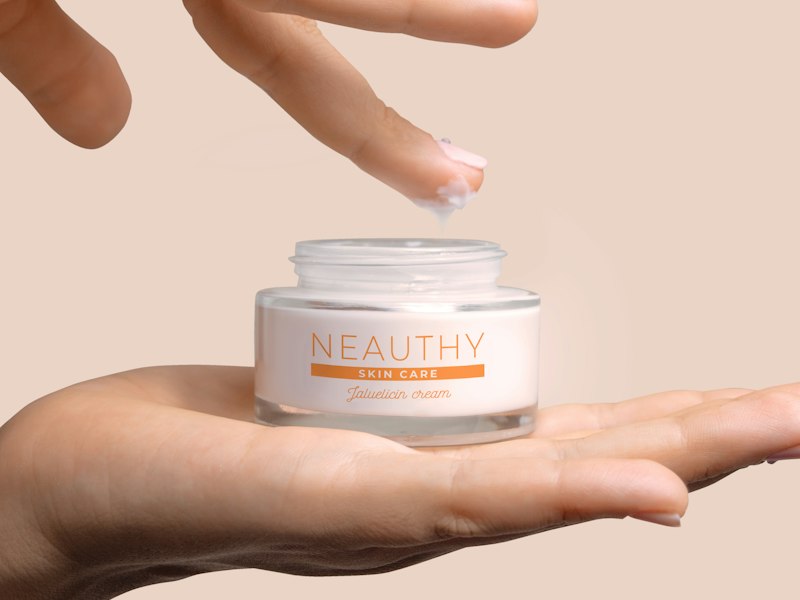
Skincare as ritual. This is where your skincare routine does double duty. The physical acts of cleansing, applying serums, and moisturizing involve repetitive, gentle touch on the face — which activates C-tactile afferent nerve fibers that directly stimulate parasympathetic activity. The key is doing it slowly and deliberately rather than rushing through it. A three-minute skincare routine done mindfully is more calming than a ten-step routine done on autopilot while mentally replaying the day.
Phase 3 (30-0 minutes before bed): The descent. The final phase is about maintaining the calm state you've built rather than adding new activities. The environment should be dim — ideally lit only by warm-spectrum light (2700K or lower) or candlelight. The activities should require minimal cognitive effort: reading fiction (not non-fiction that triggers analytical thinking), listening to music at 60-80 BPM (which entrains your heart rate downward), or simply sitting quietly with a warm drink.
The drink matters more than you might think. Herbal tea — particularly chamomile, passionflower, or valerian root blends — has modest but real evidence for promoting relaxation. A 2016 randomized controlled trial in Phytomedicine found that chamomile extract significantly improved sleep quality scores over 28 days compared to placebo. But beyond the chemistry, the act of holding a warm mug and sipping slowly is itself a parasympathetic cue — warmth on the hands, repetitive gentle action, no screens.
Light is the primary signal. Your circadian system is most sensitive to blue-enriched light in the wavelength range of 446-477 nanometers — which is exactly what screens, overhead LED lights, and fluorescent bulbs produce. After sunset, your environment should shift toward the red end of the spectrum. Practical options: smart bulbs set to 2200K and 20% brightness after 8 PM, salt lamps (which emit almost pure orange light), or simply turning off overhead lights and using a single table lamp with a warm-white bulb. The investment is minimal — a pair of $12 warm-spectrum bulbs in your bedroom and bathroom transforms the environment.
Temperature should be declining. Your bedroom should be 65-68°F by the time you get into bed. If you don't have a programmable thermostat, open a window 30 minutes before bed or turn on a fan. The perception of cooling air reinforces the core temperature drop that the warm shower initiated.
Sound should be monotonous or absent. This doesn't necessarily mean silence — a consistent, low-frequency background sound (a fan, a white noise machine, rain sounds) can be more sleep-promoting than silence because it masks sudden noises that trigger arousal. The key word is consistent: music with changing tempos, podcasts with varying content, and TV dialogue all introduce novelty that keeps the auditory cortex engaged.
Scent is underrated. Olfactory stimuli bypass the thalamus and act directly on the limbic system, which is why certain scents can shift emotional states almost instantly. Lavender has the most evidence — a 2015 meta-analysis of 11 studies found it consistently improved self-reported sleep quality, likely through anxiolytic (anti-anxiety) effects rather than direct sedation. A few drops of lavender essential oil on your pillowcase or in a diffuser during the wind-down period is one of the simplest, cheapest, and most underused sleep interventions available.
"I don't have 90 minutes." You don't need 90. Start with 30 — just Phase 3 — and add backward over time. Even a 15-minute routine of turning off screens, washing your face slowly, and reading two pages of a book is measurably better than going straight from your phone to your pillow. The 90-minute framework is the ideal; any version of intentional transition is an improvement over none.
"My partner has a different schedule." Your wind-down doesn't need to match theirs. If they're watching TV while you're in Phase 2, use earplugs during your stretching or do your routine in a different room. The only shared element that matters is the bedroom environment — light and temperature at the point of sleep should work for both of you.
"I can't stop thinking about tomorrow." This is the to-do list solving its problem. Write everything down during Phase 1 — every task, every worry, every "don't forget." Once it's on paper, your brain has permission to release it. If new thoughts arise during Phases 2 and 3, keep a small notepad by the bed and write them down without engaging with them. The act of writing is the discharge; the thinking is the trap.
"It feels forced and unnatural." Every habit feels forced at first. The research on habit formation suggests 21-66 days for a new behavior to feel automatic, depending on complexity. Start with the elements that appeal to you most and add others gradually. If stretching feels good but journaling doesn't, skip the journaling. The ritual should serve you, not the other way around.
Research in behavioral sleep medicine consistently shows that structured pre-sleep routines reduce sleep onset latency by an average of 20 minutes. But the mechanism behind this improvement has less to do with any single activity and more to do with the predictability itself. When your brain encounters the same sequence of cues each evening, it begins anticipating sleep before you even climb into bed. This anticipatory response triggers parasympathetic nervous system activation, essentially telling your body it is safe to power down.
The concept of "sleep pressure" helps explain why evening rituals work even on nights when you feel wired. Adenosine, a neurotransmitter that builds throughout the day, creates the biological urge to sleep. Stress hormones like cortisol can mask that pressure, keeping you alert despite being physiologically tired. A well-designed wind-down ritual systematically lowers cortisol so adenosine's signal can finally come through. This is why you might feel a sudden wave of exhaustion partway through your routine, as if your body was waiting for permission.
One underappreciated aspect of ritual is its relationship with decision fatigue. By the end of a demanding day, your prefrontal cortex is depleted, which paradoxically makes it harder to do the very things that would help you relax. A pre-set ritual removes the need to decide what to do next. You simply follow the sequence. This cognitive offloading is especially powerful for women who spend their days managing logistics for others, because the ritual becomes the one part of the evening that requires zero planning.
Temperature regulation is another physiological lever that rituals can pull. Your core body temperature needs to drop by roughly one degree Fahrenheit to initiate sleep. Activities like a warm bath or shower accelerate this process through a mechanism called vasodilation: warm water draws blood to the surface of your skin, and when you step out, that blood cools rapidly, pulling your core temperature down. Timing this 60 to 90 minutes before bed aligns perfectly with natural circadian temperature dips.
Finally, consistency matters more than duration. A 20-minute ritual performed every night will outperform an elaborate 90-minute routine done sporadically. The brain's associative learning depends on repetition. If you skip three nights and then attempt the full routine on the fourth, you have essentially broken the conditioned response and need to rebuild it. Start small, stay consistent, and let the ritual deepen naturally over weeks.
The most effective wind-down ritual is the one you'll actually do. Here's a framework for designing yours:
Pick one activity from each phase that appeals to you. Try it for two weeks without modification. After two weeks, assess: are you falling asleep faster? Waking less during the night? Feeling more rested in the morning? If yes, keep it. If not, swap one element and try another two weeks. The experimentation period is worth the investment — once you find the combination that works for your specific nervous system, you'll have a tool that serves you for years.
The non-negotiable elements, based on the evidence: screens off at least 30 minutes before sleep, warm water exposure at some point in the evening, and a bedroom that's cool, dark, and either quiet or consistently masked. Everything else is personalization. Some people benefit from journaling; others find it activating. Some people love tea rituals; others need to avoid liquids after 7 PM. Some people stretch; others meditate; others simply sit in dim light and breathe. The mechanism — parasympathetic activation through reduced stimulation — is universal. The specific trigger that works best is individual.
Why you should trust this review. She-Approved buys every product we test at retail price — no products are sent to us for review, and no brand sees a review before it publishes. Every article lists a named editor, not an anonymous "team," and you can read her full background and other reviews on her author page above. Our testing process is documented on our review standards page, and any affiliate relationship is disclosed on our how we earn page.
Our methodology. Claims in this category are checked against published clinical evidence and named medical sources. Read the full process on our review standards page.
Last updated: August 27, 2026