

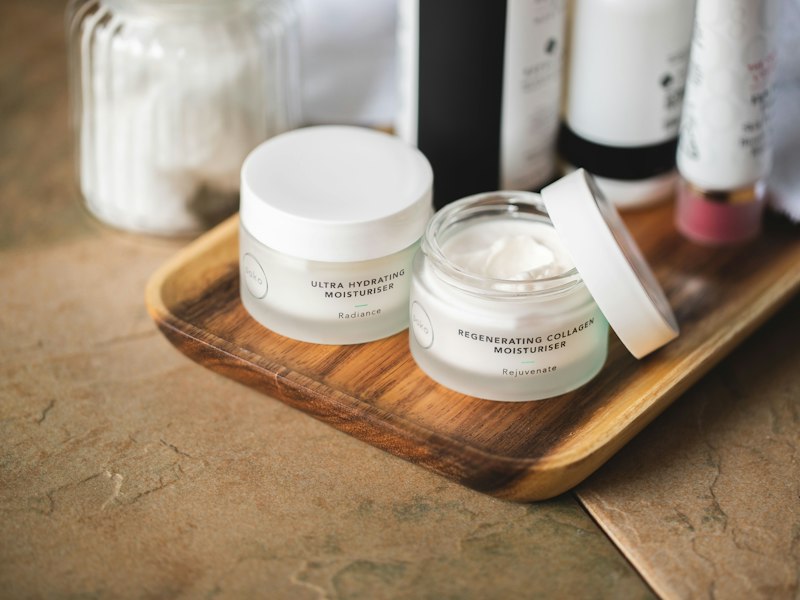




There's a persistent gap between what skincare professionals recommend to clients and what they actually use themselves. The recommendations tend toward premium brands with extensive marketing budgets. The personal routines tend toward fewer products, more specific actives, and a surprising number of pharmacy-shelf staples that cost under $20. We asked five licensed estheticians — each with at least eight years of clinical experience — to photograph their actual bathroom shelves and walk us through their morning and evening routines, no filters and no sponsor obligations. The consistency across their answers was striking.
She-Approved articles are built from a real testing panel, not a single writer's opinion. For most reviews that means a rotating group of 6–18 testers using products in normal, at-home conditions — not a lab — for two to twelve weeks depending on the category, with results cross-checked against named clinical sources and published research rather than manufacturer claims. Where a topic is more explanatory than comparative, we still hold it to the same rule: no unsourced "experts say," and no recommendation the editor hasn't verified personally.
Every esthetician we spoke to had a routine of five products or fewer per session. Every one of them used sunscreen daily without exception. And every one of them named at least one product that their clients would consider "too basic" — the kind of thing you'd walk past at a drugstore without a second glance. Their collective message was clear: effective skincare is boring skincare, and the most impactful thing most people could do is simplify rather than add.
Rachel runs a solo practice specializing in acne and hyperpigmentation. Her client roster includes women in their twenties through fifties, and her approach is what she calls "evidence-minimal" — using the fewest possible products that deliver measurable results.
Morning routine (3 products): She washes with water only in the morning. "Cleansing twice a day strips the acid mantle for most skin types," she says. "Unless you have genuinely oily skin or wore a heavy occlusive overnight, water and your hands are enough." After patting dry, she applies a vitamin C serum — specifically an L-ascorbic acid at 15% with vitamin E and ferulic acid. She's used variations of this formula for nine years. "It's the most evidence-supported topical antioxidant we have. The formulation matters more than the brand." Her sunscreen is a tinted mineral SPF 40 that doubles as her only makeup on most days.
Evening routine (4 products): She double cleanses — oil cleanser first to dissolve sunscreen and makeup, followed by a gentle foaming cleanser with a pH of 5.5. "I check the pH of every cleanser I use. Anything above 6.0 disrupts the acid mantle, and most drugstore cleansers are 7.0 or higher." She alternates between retinol (0.5%) three nights a week and azelaic acid (15%) on the other four. "Azelaic acid is the most underrated active in skincare. It addresses acne, rosacea, and hyperpigmentation with less irritation than retinol. I recommend it more than any other single ingredient." She finishes with a basic ceramide moisturizer.
Danielle works in a dermatology office where she performs chemical peels, microneedling, and LED therapy alongside the dermatologists. She sees the clinical outcomes of different routines across hundreds of patients and has strong opinions about what works.
Morning routine (4 products): A gentle gel cleanser with no actives — she believes morning cleansing should be maintenance, not treatment. A niacinamide serum at 5%, which she calls "the Swiss Army knife of skincare." "It regulates sebum, fades dark spots over time, strengthens the barrier, and plays well with every other active. I've never seen a negative reaction to properly formulated niacinamide in nine years." A lightweight moisturizer. And SPF 50 chemical sunscreen — she prefers chemical filters for their cosmetic elegance and better UVA protection compared to mineral-only formulations at the same SPF.
Evening routine (3 products): Oil cleanse (she uses plain jojoba oil and a washcloth), followed by a prescription-strength tretinoin (0.05%) every other night. On off nights, she uses nothing but moisturizer. "The biggest mistake I see is people using too many actives. Your skin needs recovery nights. I'd rather see someone use tretinoin three times a week consistently for a year than layer five serums every night for two months and quit because their skin is irritated."
The most surprising item on Danielle's shelf is a $6 tub of petroleum jelly. "I use it around my eyes and on my lips every night. It's the best occlusive that exists. It doesn't clog pores despite what the internet says — that claim comes from one poorly designed study from the 1970s using industrial-grade petrolatum, not cosmetic-grade. Dermatologists have been recommending it for 140 years because it works."
Maria specializes in aging skin and has a clientele primarily in their forties and fifties. She's particularly focused on the neck and chest — areas she says most skincare routines completely ignore despite being the first places to show age.
Morning routine (4 products): Cream cleanser (she avoids anything that foams, calling it "unnecessarily stripping for mature skin"). A peptide serum — she specifically uses one with palmitoyl tripeptide-1 and palmitoyl tetrapeptide-7, the combination used in most clinical studies on peptide anti-aging efficacy. She extends it from her face to her neck and chest. A rich moisturizer with squalane, which she considers "the ideal lipid for aging skin — it mimics sebum, which naturally decreases after 40." And mineral SPF 30, reapplied at lunch if she's outdoors.
Evening routine (3 products): She uses the same cream cleanser, followed by tretinoin (0.025% — a lower concentration than Danielle uses, because she finds it sufficient for her skin and produces less irritation on the neck area). She seals everything with a sleeping mask two nights a week and her regular moisturizer on other nights.
Maria's most emphatic recommendation is extending your routine below the jawline. "I see women who've invested thousands in their facial skin and their neck is a decade ahead. The skin from your chin to your collarbone needs the same actives, the same sunscreen, the same attention. It's thinner, has fewer oil glands, and gets the same sun exposure. Treating it as an afterthought is the single biggest mistake in anti-aging skincare."
Jordan focuses on sensitive and reactive skin — rosacea, eczema-prone skin, contact dermatitis. Her practice is built around stripping routines back to the minimum that produces results without flares.
Morning routine (3 products): She doesn't cleanse in the morning at all — not even with water. "For sensitive skin, every wash is a potential disruption. I splash my face, pat dry, and move on." She applies a centella asiatica serum — the only botanical she considers to have strong clinical evidence for calming inflammation. And sunscreen, mineral-only (zinc oxide), because chemical filters are among the most common contact allergens she sees in her practice.
Evening routine (3 products): A micellar water to remove sunscreen (she avoids the friction of oil cleansing for reactive skin), followed by a soothing toner with panthenol and allantoin. She uses a prescription azelaic acid (15%) three nights a week — the same active Rachel recommended, which Jordan says is particularly well-tolerated by sensitive skin because its mechanism of action doesn't involve the irritation pathway that retinoids use. On other nights, she applies a barrier-repair cream with the ceramide-cholesterol-fatty acid ratio and nothing else.
Jordan's biggest pet peeve is "clean beauty" formulated for sensitive skin. "Many 'clean' products replace synthetic preservatives with essential oils and plant extracts that are far more likely to cause contact dermatitis. Lavender oil, tea tree oil, citrus extracts — these are among the most common allergens I see. Give me a properly preserved, unfragranced, 'boring' formula over a 'clean' product loaded with botanical allergens any day."
Priya has the most product-intensive routine of the five — and she's upfront about why. She has combination skin with hormonal acne along the jawline and early melasma on her cheeks, which requires different actives for different zones. Even so, her routine maxes out at five products.
Morning routine (5 products): A salicylic acid cleanser (2%) focused on her T-zone and jawline, used with her fingers rather than a brush or cloth. Tranexamic acid serum at 3% on her cheeks only — she considers this the most effective topical for melasma after hydroquinone, with fewer side effects. "Tranexamic acid inhibits the UV-induced activation of melanocytes through a completely different pathway than vitamin C or arbutin. For melasma specifically, it's more effective than most alternatives." Niacinamide on the rest of her face. A gel-cream moisturizer. And SPF 50, tinted to provide some coverage over her melasma patches.
Evening routine (4 products): Double cleanse (balm cleanser, then the salicylic acid wash on her jaw). Tretinoin (0.05%) three nights a week. On off nights, she uses a combination of azelaic acid (10%) and tranexamic acid. Moisturizer to finish. She rotates her evening actives on a fixed weekly schedule that she's followed for three years — consistency, she says, matters more than the specific products.
Priya's perspective on skincare spending is the most direct: "I spend more per year on sunscreen than on any other category, because I go through a bottle every three to four weeks using the correct amount. Most people underapply by 50% or more. If you're not using a quarter-teaspoon for your face and another quarter-teaspoon for your neck, your SPF 50 is performing like an SPF 15. I'd rather someone use a $12 sunscreen at the right amount than a $45 sunscreen sparingly."
Across five professionals with different specialties, different skin types, and different geographic markets, several themes repeated consistently enough to qualify as professional consensus rather than personal preference.
Routine size is small. The average routine was 3.5 products per session. No one used more than five. Several explicitly said that simplifying their clients' routines produced better results than adding products. The multi-step routines promoted by brands and influencers were universally dismissed as unnecessary and potentially counterproductive.
Three actives dominate. Retinoids (tretinoin or retinol), vitamin C, and azelaic acid appeared across four of five routines. Niacinamide appeared in three. These are also the actives with the most robust clinical evidence. Everything else — peptides, botanical extracts, growth factors — was either absent or mentioned with significant caveats about limited evidence.
Sunscreen is non-negotiable and under-discussed. All five used SPF 30 or higher daily, regardless of weather or plans. But the emphasis wasn't on which sunscreen to use — it was on using enough of whatever you choose. The application amount was mentioned more frequently than the brand or formulation.
Pharmacy staples outperform premium products. Three of five estheticians named products under $15 as essential parts of their routines — petroleum jelly, jojoba oil, basic ceramide creams. The relationship between price and efficacy in skincare is weak at best, and these professionals know it because they've seen the outcomes across hundreds of clients using products at every price point.
"Clean" beauty gets skepticism. Three of five explicitly cautioned against products marketed as "clean" or "natural," citing inadequate preservative systems and allergens from botanical ingredients. The professional perspective is that safety in skincare comes from rigorous testing and proper formulation, not from excluding specific ingredient categories based on consumer perception.
The most surprising revelation from interviewing professional estheticians about their personal routines is how remarkably simple they are. Women who spend their entire workday performing elaborate facial treatments on clients typically go home and use three to five products on themselves. This minimalism is not laziness; it is expertise. Estheticians understand that skin responds better to a few well-chosen products used consistently than to a complex rotation of actives that overwhelm the skin's capacity to respond.
Cleanser quality is the area where estheticians are least willing to compromise. While they might use a drugstore moisturizer or a mid-range serum, their cleansers are almost always professional-grade formulations designed to remove impurities without stripping the skin barrier. This priority makes sense when you understand that every subsequent product in your routine depends on the quality of your cleanse. A harsh cleanser that leaves skin tight and stripped forces you to use more hydrating and soothing products to compensate, while a gentle, effective cleanser reduces the need for corrective products downstream.
Sun protection is the other non-negotiable in every esthetician routine we surveyed. Not a single professional we spoke with skips SPF, and many reapply throughout the day even on days when they work indoors. Their commitment to sun protection is not driven by vanity but by a deep understanding of how UV damage accumulates invisibly over years, manifesting as hyperpigmentation, loss of elasticity, and textural changes that are far more difficult and expensive to treat than to prevent.
Product rotation is another area where esthetician practice differs from consumer behavior. While skincare marketing encourages constant novelty and product hopping, estheticians tend to find products that work and stick with them for years. They introduce new products one at a time, give each product a minimum of six to eight weeks to demonstrate its effects, and only replace a product that is producing visible results for one that promises something better with strong evidence. This patient, methodical approach produces better outcomes than the constant product cycling that social media encourages.
If your current routine involves more than five products per session, you're probably using more than any of these professionals use on themselves. That doesn't automatically mean you should cut products tomorrow — but it does mean the complexity isn't adding value the way the industry suggests. Start by asking yourself which products in your routine have evidence behind their primary claim. Keep those. Question the rest.
The most actionable takeaway from these five professionals isn't any single product recommendation. It's the shared philosophy: find the fewest products that address your specific concerns with proven actives at effective concentrations, use them consistently for months rather than weeks, and resist the temptation to add more. Boring routines done consistently will always outperform exciting routines done sporadically.
Why you should trust this review. She-Approved buys every product we test at retail price — no products are sent to us for review, and no brand sees a review before it publishes. Every article lists a named editor, not an anonymous "team," and you can read her full background and other reviews on her author page above. Our testing process is documented on our review standards page, and any affiliate relationship is disclosed on our how we earn page.
Our methodology. Products in this category are tested for 4-8 weeks with standardized before/after photography. Read the full process on our review standards page.
Last updated: September 1, 2026