



Walk into any Sephora, Target beauty aisle, or independent skincare shop in 2026, and you'll see these words everywhere: clean, natural, organic, non-toxic, dermatologist-tested, hypoallergenic, fragrance-free, cruelty-free. They're printed on pastel packaging in reassuring fonts, and they feel like promises. But here's the part that most brands would rather you didn't look into: many of these terms have no legal definition in the United States. No federal standard. No required testing. No consequences for misuse.
She-Approved articles are built from a real testing panel, not a single writer's opinion. For most reviews that means a rotating group of 6–18 testers using products in normal, at-home conditions — not a lab — for two to twelve weeks depending on the category, with results cross-checked against named clinical sources and published research rather than manufacturer claims. Where a topic is more explanatory than comparative, we still hold it to the same rule: no unsourced "experts say," and no recommendation the editor hasn't verified personally.
This isn't a conspiracy — it's a regulatory gap. The FDA oversees cosmetics but does not pre-approve products or ingredients before they hit shelves (with the exception of color additives). The FTC can intervene if marketing claims are provably false, but "clean" and "natural" are subjective enough to resist challenge. The result is a labeling landscape where brands write their own definitions, certification bodies compete for relevance, and the consumer is left holding a jar that says "clean" without knowing what that word excludes — or whether it excludes anything at all.
This guide breaks down every major claim you'll see on beauty products, explains what each one actually guarantees, and offers a practical framework for evaluating products without needing a chemistry degree.
"Clean beauty" has no legal definition, no federal standard, and no universal criteria. When a brand calls its product "clean," it's telling you it meets that brand's internal ingredient exclusion list — nothing more. Sephora's "Clean at Sephora" program excludes sulfates (SLS/SLES), parabens, mineral oil, formaldehyde, and about 50 other ingredients. Target's "Target Clean" icon has a different list. Credo Beauty, an independent clean beauty retailer, maintains a "Dirty List" of over 2,700 restricted ingredients. These lists overlap significantly but are not identical.
The practical problem: two products sitting next to each other on the same shelf can both say "clean" while having completely different ingredient standards. Product A might exclude parabens but include phenoxyethanol (a preservative some clean advocates also flag). Product B might exclude both. Both are "clean" — by their own definitions.
What this means for you: "clean" is a starting point, not a finish line. It tells you the brand is at least thinking about ingredient selection, which is more than many drugstore brands do. But it doesn't tell you which ingredients were excluded or why, and it doesn't mean the remaining ingredients are inherently safer. Flip the product over and read the actual ingredient list — that's the real label.
In the food industry, the FDA has a loose working definition of "natural" (nothing artificial or synthetic). In cosmetics, no such definition exists. A product can contain 99% synthetic ingredients and one plant extract and call itself "natural" without breaking any law. There's no required percentage threshold, no certification requirement, and no enforcement mechanism.
Some brands use "natural" to mean plant-derived ingredients. Others use it to mean minimally processed. Others use it because the word sells products. A 2023 consumer survey by the Environmental Working Group found that 72% of shoppers interpreted "natural" as meaning "free from synthetic chemicals," which is almost never what the brand intends.
The distinction between "natural" and "synthetic" is also less meaningful than most consumers assume. Water is natural. Arsenic is natural. Hyaluronic acid can be derived from rooster combs (natural) or produced by bacterial fermentation in a lab (synthetic) — the molecule is identical. The origin of an ingredient tells you very little about its safety or efficacy. What matters is the concentration, the formulation context, and the evidence base for that specific molecule on skin.
In cosmetics, "organic" has partial federal regulation. The USDA organic seal — the green-and-white circle you know from food — can appear on a beauty product only if it contains at least 95% certified organic ingredients (excluding water and salt). Products with 70-94% organic content can say "made with organic ingredients" but can't use the seal. Below 70%, you can list individual organic ingredients but can't make an organic claim on the front label.
This is the most regulated claim in beauty, and it's still imperfect. The USDA organic standards were designed for agriculture, not cosmetics. They address farming practices (no synthetic pesticides, no GMOs) but don't specifically address safety in topical application. An ingredient can be USDA organic and still cause skin irritation. And the certification process is expensive — approximately $3,000-$10,000 per product line annually — which means many small brands using organic ingredients can't afford the seal.
European certification is stricter. COSMOS Organic (the EU standard, administered by organizations like Ecocert and the Soil Association) has specific requirements for cosmetics: minimum 95% of plant-based ingredients must be organic, a defined "negative list" of prohibited synthetic ingredients, and requirements for environmentally responsible manufacturing and packaging. If you see COSMOS Organic on a product, it meets a genuinely rigorous standard.
Everything is toxic at some dose — water, oxygen, vitamin A. Toxicity is a function of dose, exposure route, and duration, not an inherent property of a substance. When a beauty brand says "non-toxic," it's making a claim that toxicology doesn't support as a category.
What brands usually mean by "non-toxic" is that their product doesn't contain ingredients that appear on one or more watchlists — typically the EWG's database, Campaign for Safe Cosmetics' lists, or the EU's Annex II (the list of substances prohibited in cosmetics sold in Europe, which includes over 1,600 entries compared to roughly 11 substances banned by the FDA in the US). This is a meaningful distinction in practice — a product that avoids EU Annex II ingredients is avoiding substances that European regulators have determined pose unacceptable risk at typical use concentrations.
But the word "non-toxic" itself is doing more emotional work than scientific work. It implies that other products are toxic, which creates fear-based purchasing decisions that may not track with actual risk. The preservative methylisothiazolinone is legitimately irritating and was restricted by the EU in leave-on products — that's a data-backed safety concern. But the paraben methylparaben, which appears on many "toxic" lists, has been reviewed by the EU Scientific Committee on Consumer Safety and found safe at concentrations up to 0.4% — the typical usage level in cosmetics.
"Dermatologist-tested" means a dermatologist was involved in testing the product. It doesn't mean the dermatologist approved it. It doesn't specify what was tested, how many subjects participated, what the results were, or whether the dermatologist had any financial relationship with the brand. A product could be tested by a dermatologist, found to cause irritation in 30% of subjects, and still legally carry the "dermatologist-tested" label — because it was tested.
"Dermatologist-recommended" is marginally more meaningful because it implies an endorsement, but it still doesn't specify the basis. One paid dermatologist recommending a product is enough. There's no required threshold for how many dermatologists must recommend it, no required disclosure of compensation, and no standard for what "recommendation" involves.
The stronger claim to look for is "clinically tested" — which typically (though not always) implies a controlled study with measurable outcomes. Even better: "clinically tested" with published or accessible results. Some brands, particularly in the medical-grade skincare space (SkinCeuticals, La Roche-Posay, Avène), fund and publish peer-reviewed studies on their formulations. That's a fundamentally different level of evidence than a logo on the box.
The FDA attempted to define "hypoallergenic" in 1974, proposing that products bearing this label would need comparative clinical testing proving lower allergic reaction rates. Cosmetic manufacturers sued, and the regulation was overturned by a federal court in 1977. Since then, "hypoallergenic" has been entirely self-regulated. Brands can use it freely with no testing requirement.
What it usually signals: the product was formulated without common allergens (fragrance, certain dyes, lanolin, certain preservatives). This is genuinely useful information if you have sensitive or reactive skin — a product formulated to minimize allergen exposure is less likely to cause a reaction than one that wasn't. But "hypoallergenic" is not a guarantee of no reaction. Individual allergies vary enormously, and a product free of the top 26 allergens can still contain an ingredient that your specific skin reacts to.
If allergic reactions are a serious concern, patch testing is the only reliable method: apply a small amount of product to the inside of your forearm, cover with a bandage, and wait 48 hours. If no redness, swelling, or itching appears, the product is unlikely to cause a facial reaction. No label can substitute for this test.
These two terms look synonymous but they're not. "Fragrance-free" means no fragrance ingredients were added to the product. "Unscented" means the product has no perceptible scent — but it may contain masking fragrances specifically added to neutralize the smell of other ingredients. An "unscented" product can contain the same fragrance chemicals that cause reactions in sensitive individuals, added for a different purpose.
Under FDA labeling rules, the word "fragrance" on an ingredient list is a catch-all that can represent any combination of up to 3,000+ individual fragrance chemicals. Manufacturers are not required to disclose which specific chemicals compose their fragrance blend — this is considered trade secret protection. The International Fragrance Association (IFRA) maintains a list of ingredients used in fragrances, but brand-level disclosure is voluntary.
This matters because fragrance is the single most common cause of cosmetic contact dermatitis, according to the American Contact Dermatitis Society. If you react to fragranced products, "fragrance-free" is the claim you want — not "unscented," and definitely not "naturally scented" (which means the scent comes from essential oils, which are themselves common allergens).
No US law defines "cruelty-free." The most recognized certifications come from Leaping Bunny (administered by Cruelty Free International) and PETA's "Beauty Without Bunnies" program. Leaping Bunny's certification is the more rigorous: it requires that no animal testing occur at any stage of product development, including ingredient sourcing, and mandates ongoing supplier monitoring and independent audits. PETA's certification relies on company self-reporting.
A critical nuance: a product can be cruelty-free everywhere it's sold except China, where foreign cosmetics historically required mandatory animal testing for import. This changed partially in 2021, when China eliminated mandatory animal testing for "general cosmetics" (skincare, makeup) imported into the country — but "special cosmetics" (sunscreen, hair dye, whitening products) still require it. Some brands maintain cruelty-free status by simply not selling in China. Others sell there under the new exemption rules but note that post-market testing by Chinese authorities may still involve animals.
"Vegan" means the product contains no animal-derived ingredients. Common animal-derived ingredients in beauty include beeswax, lanolin (from sheep's wool), carmine (a red pigment from cochineal insects), squalane derived from shark liver (versus plant-derived squalane from olives or sugarcane), and collagen (typically from bovine or marine sources). A product can be vegan but not cruelty-free, and vice versa.
When brand claims feel unreliable, third-party certifications add a layer of independent verification. The most meaningful ones in beauty:
EWG VERIFIED: The Environmental Working Group's certification requires that all ingredients score a 1 or 2 (low hazard) on EWG's database, meet strict criteria for transparency and manufacturing, and avoid EWG's list of unacceptable ingredients. This is a stringent standard, though critics note that EWG's hazard scoring has been questioned by some toxicologists for overweighting hazard identification versus actual exposure risk.
COSMOS Organic / COSMOS Natural: The European gold standard. COSMOS Organic requires 95% organic plant-based ingredients and prohibits most synthetic inputs. COSMOS Natural is less strict (no organic percentage required) but still prohibits a long list of synthetic ingredients and requires environmentally responsible sourcing.
B Corp: Not a product certification but a company-level assessment covering environmental practices, labor standards, supply chain ethics, and governance. A B Corp beauty brand has been audited across its entire business, not just its ingredient list. This is the closest thing to a holistic ethics certification in the industry.
MADE SAFE: A nonprofit certification that screens products against a list of known harmful substances, including carcinogens, endocrine disruptors, reproductive toxins, neurotoxins, and environmental toxins. Products are also screened for ecosystem safety. It's a relatively new certification (founded 2015) but growing in adoption.
You don't need to memorize ingredient databases or carry a reference card to the store. Here's a five-point framework that covers 90% of what matters:
1. Ignore the front of the package. Every claim on the front is marketing. The regulated information is on the back: the ingredient list (listed in descending order of concentration), the net weight, the manufacturer, and any certification logos.
2. Look for the short ingredient list. Not because fewer ingredients are inherently better, but because a shorter list is easier to evaluate. If a product has 8 ingredients and you recognize 6 of them, you can research the other 2 quickly. A 40-ingredient formula makes that impractical.
3. Check the first five ingredients. The first five typically comprise 70-80% of the formula. If the hero ingredient the brand is marketing (vitamin C, retinol, niacinamide) appears seventh or lower on the list, it's present at a low concentration — potentially below effective levels.
4. Trust certifications over claims. A Leaping Bunny logo means more than the word "cruelty-free" in a brand's own font. A COSMOS Organic seal means more than "natural" in green cursive. Third-party certifications represent independent verification; brand claims represent brand assertions.
5. Recognize what labels can't tell you. No label tells you whether a product will work for your specific skin. No certification prevents a reaction in someone with unusual sensitivities. Labels narrow the field; patch testing and personal experience determine the winner.
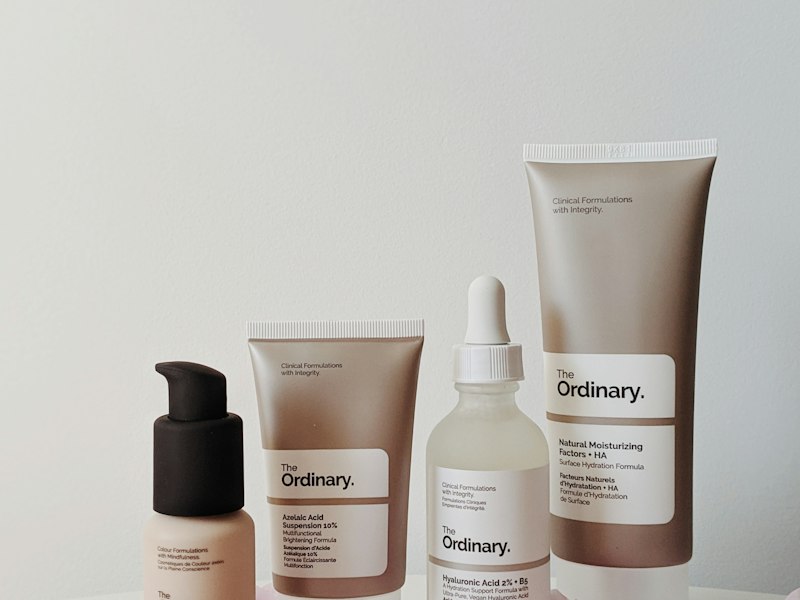
The beauty industry is slowly moving toward greater transparency — driven partly by consumer demand, partly by regulatory pressure from the EU (which continues to tighten ingredient standards), and partly by brands like The Ordinary and Paula's Choice that have built market share specifically by demystifying formulations. Until regulation catches up to marketing, reading the back of the bottle remains the most reliable act of self-advocacy in beauty.
Why you should trust this review. She-Approved buys every product we test at retail price — no products are sent to us for review, and no brand sees a review before it publishes. Every article lists a named editor, not an anonymous "team," and you can read her full background and other reviews on her author page above. Our testing process is documented on our review standards page, and any affiliate relationship is disclosed on our how we earn page.
Our methodology. Products in this category are tested for 4-8 weeks with standardized before/after photography. Read the full process on our review standards page.
Last updated: September 1, 2026