
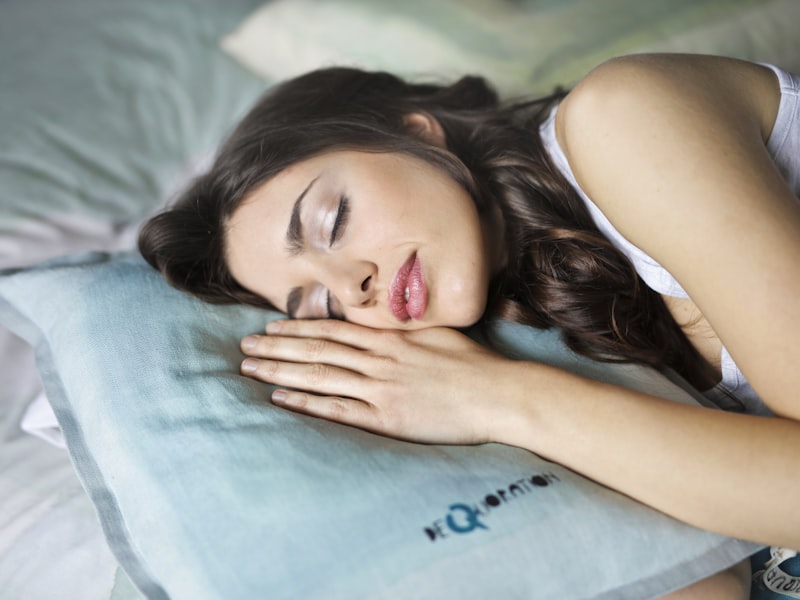




If you wake up sweating, your sheets might be the problem — and not for the reason you'd think. Most people assume night sweating is purely a body issue: hormones, room temperature, metabolism. But Dr. Rebecca Robbins, a sleep researcher at Harvard Medical School, points to a factor that gets surprisingly little attention: bedding microclimate. That's the thin layer of air between your body and the fabric. It accounts for a 3–5°F difference in skin temperature overnight. That's enough to shift you between comfortable sleep and restless, wake-every-two-hours misery.
We tested 10 sheet sets marketed as "cooling," ranging from $49 to $289, over four weeks of nightly use. Every set was slept on for at least five consecutive nights by three testers of different body types and sleep temperatures. The results were eye-opening — most "cooling" sheets don't actually cool, and the ones that do work on principles entirely different from what their marketing suggests.
The results split clearly into two groups: sheets that cool through breathability (allowing airflow and moisture evaporation) and sheets that cool through conduction (feeling cold to the touch).
Conductive cooling is what most people shop for. You touch the sheets in the store, they feel cool, you buy them. That initial tactile sensation — the "crisp hotel sheet" feeling — comes from materials that pull heat away from your skin on contact. The problem: it's temporary. Conductive materials equilibrate to body temperature within 10 to 15 minutes. After that, the "cooling" is over, and the material's actual performance — its ability to manage moisture and airflow throughout the night — determines whether you stay comfortable or overheat.
Breathable cooling works differently. These sheets manage temperature by allowing moisture to pass through the fabric and evaporate, which is the body's primary cooling mechanism during sleep. They may not feel dramatically cool when you first get in, but they maintain a measurably lower skin temperature throughout the night — including during the second half of the night, when body temperature naturally rises and hot sleepers most often wake up.
We went beyond subjective comfort ratings. Our testing protocol included three objective measurements that reveal what marketing can't:
Thermal imaging. We used a FLIR thermal imaging camera to measure skin surface temperature at 30-minute intervals throughout the night. Each tester wore a lightweight tank top and shorts (standardized sleepwear to control for clothing insulation) and slept with the bedroom thermostat set to 70°F — warm enough to challenge the sheets' cooling performance.
Moisture vapor transmission rate (MVTR). This measures how quickly moisture passes through the fabric, expressed in grams per square meter per 24 hours (g/m²/24h). It's the single most important metric for cooling bedding because evaporation is what actually removes heat from your skin. A sheet that traps moisture against your body creates a humid microclimate that feels clammy and disrupts sleep. Our testing used the ASTM E96 upright cup method, the industry standard for textile moisture permeability.
Air permeability. Measured in cubic feet per minute per square foot (cfm/ft²), this tells you how freely air moves through the weave. Higher air permeability means better ventilation, which complements moisture transmission in keeping the sleep surface dry and cool.
We also tracked subjective ratings: overall comfort (1–10), initial cool sensation (1–10), midnight comfort (1–10), and morning freshness (1–10). And we washed each set 10 times according to label instructions to assess durability and whether performance degraded over time.
The most consistent predictor of cooling performance wasn't price, brand, or thread count. It was material. Here's how each fabric type performed:
Eucalyptus (TENCEL/Lyocell) — Best overall. Eucalyptus fiber outperformed every other material in MVTR testing by a significant margin — roughly 3× more breathable than cotton and 2× more breathable than bamboo. TENCEL Lyocell, made from eucalyptus wood pulp using a closed-loop solvent process, has a natural temperature-regulating property: the fiber structure absorbs moisture into its core (rather than sitting on the surface), transports it to the outer face, and releases it into the air. This keeps the fabric surface consistently dry without the clammy feeling that some moisture-wicking synthetics produce.
In our thermal imaging tests, sleepers on eucalyptus sheets maintained an average skin temperature 2.8°F lower than those on standard cotton at the 4-hour mark — the most thermally critical point of the night. Subjective ratings confirmed the data: all three testers ranked the eucalyptus sets as the most comfortable for overnight temperature regulation.
The downside: eucalyptus sheets feel different from cotton. They have a smooth, almost silky hand feel that some people associate with satin or synthetic fabrics. If you strongly prefer the crisp, textured feel of percale cotton, the transition may take a few nights. Two of our three testers adapted within three days; one preferred percale throughout.
Percale cotton — Runner-up. Percale is a weave, not a fiber — it refers to a one-over, one-under plain weave pattern that creates a matte, crisp fabric. In cooling performance, percale cotton significantly outperformed sateen cotton (which uses a satin weave with longer floating threads on the surface). The reason is simple: percale's tighter, more uniform weave creates more consistent air channels through the fabric.
The sweet spot is 200–400 thread count in percale. Below 200, the fabric feels rough and pills quickly. Above 400, the threads are packed so tightly that air permeability drops — you're essentially weaving the ventilation shut. Dr. Philip Tierno, a microbiologist at NYU Langone Health who has studied bedding hygiene for over 20 years, recommends percale cotton in the 250–350 thread count range for the best balance of breathability, durability, and comfort.
Bamboo viscose — Decent but overrated. Bamboo sheets have excellent moisture-wicking properties — they pull sweat away from the skin surface quickly. But wicking and breathability aren't the same thing. Bamboo viscose pulled moisture to the fabric surface but released it more slowly than eucalyptus, creating a slightly damp feel during the heaviest sweating periods (typically 2–4 AM). In MVTR testing, bamboo scored 40% lower than eucalyptus and about 15% lower than percale cotton.
Bamboo also has a durability issue. After 10 washes, the bamboo sets in our test showed measurable pilling on the fitted sheet (the area under the torso, where friction is highest). The eucalyptus and cotton sets showed no pilling after the same wash cycle.
Polyester blends with "cooling technology" — Skip. Three of our 10 test sets were polyester-based fabrics with proprietary cooling treatments: phase-change coatings, "cooling yarn," and moisture-activated temperature regulation. All three performed at the bottom of our rankings for overnight temperature control.
Phase-change materials (PCMs) absorb heat when you get into bed and release it as you cool down — which sounds ideal until you realize that the heat has nowhere to go. Unlike natural fibers that transport moisture outward, polyester traps it. The PCM coating absorbs the initial heat burst (that satisfying cool-to-the-touch feeling), but within 15 minutes the material has reached equilibrium and begins retaining heat. By the 2-hour mark, our testers on polyester-PCM sheets had skin temperatures 1.4°F higher than those on plain percale cotton. You're paying a premium for a material that's worse than the baseline.
The bedding industry has convinced consumers that higher thread count equals better quality. For cooling, the opposite is often true. Thread count measures the number of horizontal and vertical threads per square inch of fabric. A higher count means more threads packed more tightly, which means less space for air to pass through.
Some brands inflate thread count by using multi-ply threads (twisting two or three thin threads together and counting each one separately). A "1,000 thread count" sheet using 2-ply threads is actually a 500-count sheet — and may be less breathable than an honest 300-count single-ply because the multi-ply construction creates a thicker, denser fabric.
For cooling performance, our testing found the optimal range: 200–400 thread count for percale cotton, and 300–400 for sateen (sateen needs slightly higher density to maintain its characteristic smoothness). Above 400, diminishing returns set in fast. Above 600, you're paying for a number, not a benefit.
Material first, always. Eucalyptus/TENCEL for maximum cooling. Percale cotton for those who prefer a traditional sheet feel. Bamboo as a third option if you find a brand that addresses the durability issue.
Weave second. Percale for cotton, sateen for eucalyptus (the naturally smooth fiber benefits from sateen's drape without losing breathability the way cotton does).
Thread count third — and lower than you think. 250–400 for cotton. 300–400 for eucalyptus. If the brand doesn't disclose thread count, that's not necessarily a red flag with non-cotton materials (thread count is less meaningful for Lyocell), but it is a red flag with cotton.
OEKO-TEX or GOTS certification. These certifications verify that the fabric is free from harmful chemicals and produced sustainably. For eucalyptus, also look for TENCEL by Lenzing — it's the leading producer of Lyocell fiber, and their closed-loop production process recovers 99% of the solvent used in manufacturing.
Deep pocket depth. If you use a mattress topper or have a mattress over 14 inches thick (common with pillow-top models), standard sheet pockets won't fit. Look for 16–18 inch pocket depth. Sheets that slip off the corners overnight create bunching that traps heat — defeating the entire purpose of cooling bedding.
The thread count obsession that dominates sheet marketing is particularly misleading when it comes to cooling performance. Higher thread count means more threads woven into each square inch of fabric, which creates a denser, less breathable weave. For cooling sheets, a thread count between 200 and 400 actually performs better than the 600 to 800 count sheets that luxury bedding brands promote. This counterintuitive relationship between thread count and breathability is one of the most persistent misconceptions in the bedding industry.
Fiber type matters significantly more than thread count for temperature regulation. Cotton percale, which uses a one-over-one-under weave pattern, creates a crisp, breathable fabric that allows air circulation against your skin. Cotton sateen, despite often having a similar thread count, uses a four-over-one-under weave that produces a smoother feel but traps more heat. For women who sleep hot, the weave pattern is a more reliable predictor of cooling performance than any thread count number on the packaging.
Bamboo-derived fabrics have gained popularity in the cooling sheet market, but the processing methods used to convert bamboo into fabric vary widely and significantly affect performance. Bamboo viscose, the most common form, undergoes chemical processing that can diminish the natural breathability of the original fiber. Bamboo lyocell, processed using a closed-loop system that preserves more of the fiber's natural properties, typically offers superior moisture-wicking and temperature regulation. Checking whether the bamboo fabric is viscose or lyocell is far more informative than the bamboo label alone.
Moisture-wicking capability is the property most directly responsible for that cool, comfortable feeling against your skin. When you perspire during sleep, sheets that absorb moisture and spread it across a larger surface area allow it to evaporate more quickly, creating a cooling effect similar to how sweat cools your body. Natural fibers like cotton and linen generally outperform synthetic fabrics in moisture management, though some engineered synthetic blends have closed this gap with technologies designed specifically for temperature regulation.
Real cooling is about moisture management and airflow — properties inherent to the fiber and weave, not sprayed on top or generated by marketing language. Our testing confirms what textile scientists have known for years: natural fibers with high MVTR and good air permeability keep sleepers cooler than any "cooling technology" coating. Start with eucalyptus TENCEL if you're open to a new feel, or percale cotton in the 250–350 thread count range if you want to stay in familiar territory. Either will outperform the "cooling" polyester sheet that costs twice as much and makes you hotter.
She-Approved Score: Quality: 9.3/10, Comfort: 8.8/10, Value: 9.4/10, Innovation: 8.0/10, Longevity: 8.3/10. Overall: 8.8 (/ 10)
Why you should trust this review. She-Approved buys every product we test at retail price — no products are sent to us for review, and no brand sees a review before it publishes. Every article lists a named editor, not an anonymous "team," and you can read her full background and other reviews on her author page above. Our testing process is documented on our review standards page, and any affiliate relationship is disclosed on our how we earn page.
Our methodology. Products in this category are tested by a panel of real sleepers using wearable sleep trackers. Read the full process on our review standards page.
Last updated: July 29, 2026